

What Is BS EN 16005? A Plain-English Guide for Building Owners
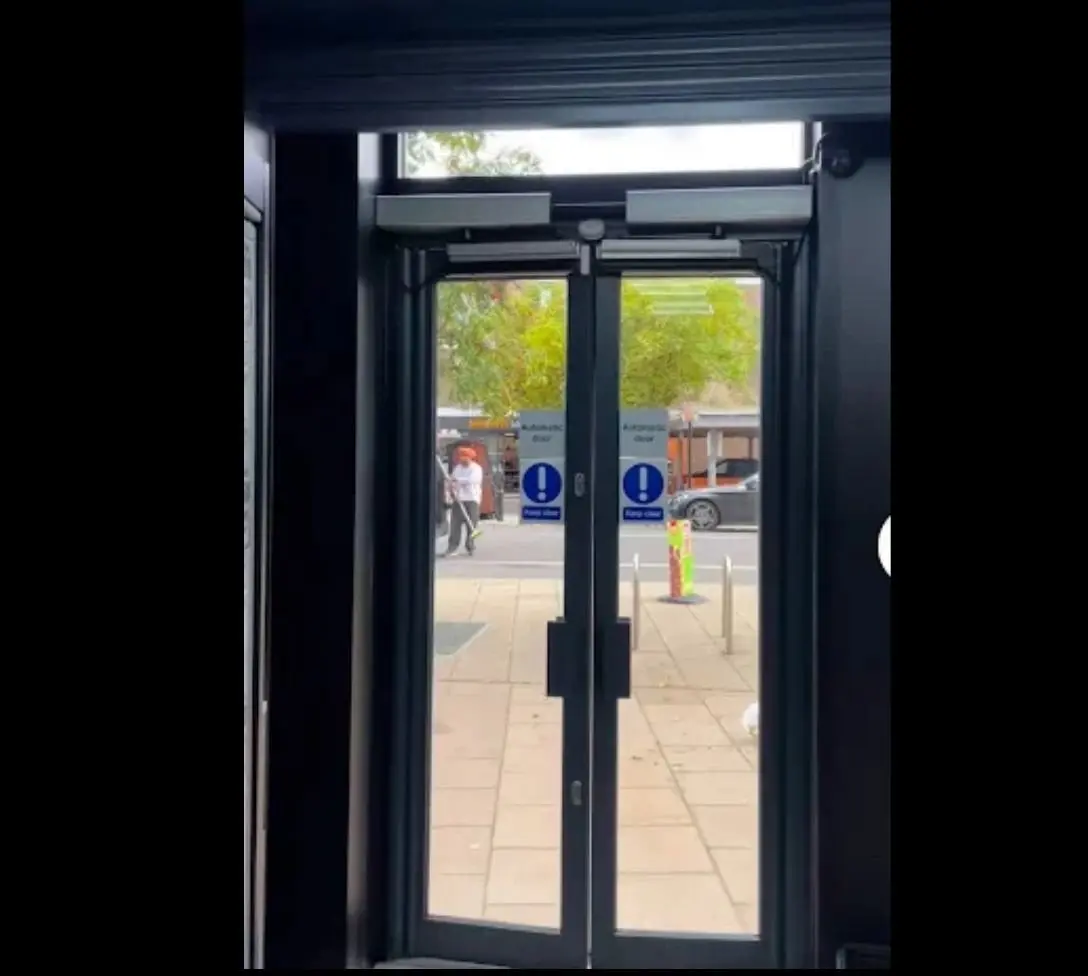
BS EN 16005 is the European standard, adopted in the UK by BSI, that sets out how power operated pedestrian doors should be designed, built and tested so they are safe in everyday use. If you own, manage or occupy a building with automatic sliding, swing or revolving doors, it is the standard your doors will be judged against.
This guide explains in plain English what the standard covers, how it fits with UK law, and what you should do about your doors, including older ones.
- BS EN 16005 covers the safety in use of power operated pedestrian doorsets: sliding, swing, revolving and folding doors.
- It deals with crushing, shearing, impact and drawing-in hazards through sensors, force and speed limits, guarding and safe escape behaviour.
- The standard is not law in itself, but it is the main benchmark for showing an automatic door is safe and properly maintained.
- The person in control of the building is responsible for keeping doors safe, maintained and documented.
- Older doors do not automatically become illegal, but they should be risk assessed against current good practice.
1. What is BS EN 16005?
The full title is Power operated pedestrian doorsets. Safety in use. Requirements and test methods. “Doorset” means the complete door: leaves, frame, operator, sensors and safety devices.
EN 16005 was published as a single European standard for automatic doors in 2012, and BSI’s British version replaced the older UK guidance from 2013. It has since been revised. BSI currently lists BS EN 16005:2023+A1:2024 as the current edition, identical to the European EN 16005.
The standard tells manufacturers and installers what a safe automatic door must do and how to test it. For owners, it is a benchmark: a door designed, installed and maintained in line with it is strong evidence that you have taken reasonable steps to keep people safe.
2. Which doors does BS EN 16005 cover?
BS EN 16005 applies to internal and external power operated pedestrian doors driven electro-mechanically, electro-hydraulically or pneumatically. According to BSI, that includes:
- Automatic sliding doors, including telescopic sliding doors and curved sliding doors
- Automatic swing doors, including balanced doors
- Revolving doors
- Folding doors with a horizontally moving leaf
- Power operated pass doors set into other doors
It covers doors for normal access, doors on escape routes, and doors that also act as fire or smoke doors. Industrial doors, gates and barriers fall under separate standards. Our guide to types of automatic doors explains the main options.
3. The hazards the standard is designed to prevent
An automatic door is a machine with moving parts in a space where people walk, often without paying attention. The main hazards are:
- Crushing: a person or body part trapped between a closing leaf and the frame, a wall or another leaf.
- Shearing: two parts sliding past each other, such as a sliding leaf passing a fixed screen, creating a scissor action that can catch fingers or hands.
- Impact: a leaf striking someone as it opens or closes, which matters most for elderly people, children and anyone with limited mobility.
- Drawing-in: fingers, clothing or bags pulled into gaps, for example where a sliding leaf runs into a pocket or past a wall.
4. The protective measures the standard describes
The standard does not require every door to have the same kit. It requires the risk at each danger point to be dealt with, using one measure or a combination.
Presence and safety sensors
Activation sensors open the door as someone approaches. Safety sensors watch the area the leaf moves through and stop or reverse it if someone is in the way. On swing doors these are often mounted on the leaf itself, covering the swing area on both sides.
Force and speed limitation
Limits on how fast and how forcefully a leaf may move make injury less likely if contact happens. These settings are tested at commissioning and should be rechecked on every service, because wear can change them.
Low-energy operation
Some swing door operators can run in a low-energy mode, where the leaf moves slowly and with limited energy. In a suitable setting, low-energy movement may mean fewer additional protective devices are needed. Whether it is suitable depends on a risk assessment of who uses the door: it is generally a better fit for light-use doors than for busy public entrances.
Guarding and safety distances
Physical measures remove danger points altogether: finger guards on the hinge side of swing doors, barriers that keep people out of the swing path, and safe clearances between moving and fixed parts. Covers over moving machinery should only be removable with a tool.
Emergency and escape behaviour
Doors on escape routes must be designed for that job. Depending on the door, that can mean opening automatically and staying open on power failure or a fire alarm signal, break-out leaves that can be pushed open in an emergency, or a means of opening manually. Not every automatic door is suitable for an escape route.
5. How BS EN 16005 fits with UK law
BS EN 16005 is a voluntary standard, but several laws require automatic doors to be safe, and the standard is the recognised way of showing that they are.
Supply of Machinery (Safety) Regulations 2008
Automatic doors are treated as machinery. In Great Britain, the Machinery Directive 2006/42/EC was implemented by the Supply of Machinery (Safety) Regulations 2008. These place duties on whoever designs, manufactures, supplies or puts the door into service: the door must be safe, and it must come with a technical file, conformity marking, a declaration of conformity and user and maintenance instructions. Converting a manual door to powered operation is generally treated the same way as supplying a new powered door. These are mainly duties of the manufacturer and installer, so choose a competent installer for new automatic doors.
Workplace (Health, Safety and Welfare) Regulations 1992
Once a door is in use, the Workplace (Health, Safety and Welfare) Regulations 1992 apply to most workplaces. Two regulations are directly relevant:
- Regulation 5 (maintenance): equipment and devices must be kept in an efficient state, in efficient working order and in good repair, with a suitable system of maintenance where appropriate. Safety devices on automatic doors fall squarely within this.
- Regulation 18 (doors and gates): doors must be suitably constructed and fitted with any necessary safety devices. Powered doors must have effective features to prevent them trapping anyone, and where necessary for health or safety they must be able to be opened manually if the power fails, unless they open automatically when it does.
Those in control of premises also have a general duty under the Health and Safety at Work etc. Act 1974 towards people who are not their employees, such as visitors and customers. HSE has confirmed this can extend to landlords and managing agents.
What about BS 7036?
Before BS EN 16005, the UK relied on BS 7036, a five-part code of practice for safety at powered pedestrian doors published in 1996. Its parts covering sliding, folding, swing and balanced doors were withdrawn in 2014. BSI then published BS 7036-0:2014, a code of practice on risk assessment and risk reduction, to sit alongside the new standard.
That has now been revised. BSI’s catalogue lists BS 7036-0:2014 as withdrawn and a new BS 7036:2026 as current, published at the end of October 2026. The new code of practice covers risk assessment and risk reduction for power operated pedestrian doors, powered entrance control equipment such as speed lanes, and manually operated revolving doors. In short, BS EN 16005 sets product safety requirements and BS 7036 gives UK guidance on assessing risk where doors are used.
6. Who is responsible, and what a risk assessment involves
Responsibility is split. The manufacturer and installer are responsible for supplying a safe door and the paperwork that goes with it. Once the door is handed over, the owner, employer or person in control of the premises is responsible for keeping it safe. In a multi-let building that may be the landlord for shared entrances and the tenant for their own doors, so check your lease.
The risk assessment
A door risk assessment looks at the specific door in its specific location. A competent engineer will typically consider:
- Who uses the door, including children, older people and disabled people.
- How busy it is and how people approach it.
- Each danger point (closing edges, hinge side, gaps behind leaves) and how it is protected.
- Sensor coverage, opening and closing speeds and forces.
- Behaviour on power failure, fire alarm and in an emergency.
- Signage and manifestation on glass.
The safety check
On each service visit, a qualified engineer should test that every safety function still works: sensors stop or reverse the door, forces and speeds are within commissioned settings, emergency functions work, and guards are secure. Between visits, staff can make simple visual checks. Our guide on how often automatic doors should be serviced covers frequency in detail.
Records and documentation
Keep a file or log book for each door. It should include:
- Handover documents: declaration of conformity, instructions and commissioning record.
- The risk assessment and any updates.
- Every service, safety check, repair and modification, with date, engineer and findings.
- Any incidents or near misses, and what was done about them.
A planned maintenance plan with written reports makes keeping records straightforward.
7. Older doors installed before BS EN 16005 existed
Many buildings still have automatic doors that were installed before 2013, when BS 7036 was the benchmark. Standards are generally not retrospective: HSE has said of the powered door and gate standards that they are not intended to be applied retrospectively. An older door does not suddenly become unlawful because a newer standard exists.
But your duties to keep the door safe still apply, and HSE has noted that many older powered doors and gates may not be as safe as they should be. For an older door we suggest:
- Have it risk assessed by a competent engineer against current good practice, including BS EN 16005 and BS 7036.
- Deal with any significant gaps, for example adding safety sensors, finger guards or barriers.
- Consider whether an upgrade to a modern operator is more sensible than repeated repairs, especially if parts are hard to source.
- Put the door on a regular maintenance schedule and start a proper log book if one does not exist.
Signs a door may not be safe
Take a door out of use and get it checked if you notice any of these:
- It closes on people, or does not stop or reverse when someone is in the way.
- It moves faster, harder or more erratically than usual.
- Grinding or banging noises, or a leaf that drags.
- Missing or damaged guards, covers or signage.
- It does not open as it should on power loss or a fire alarm test.
- Someone has been hurt or nearly hurt.
For a quick fault-finding checklist, see automatic door not working. If a door is unsafe, switch it off and secure it, then arrange an emergency call-out.
BS EN 16005: common questions
Is BS EN 16005 a legal requirement?
Not in itself. It is a voluntary standard. However, the law requires automatic doors to be safe and properly maintained, and BS EN 16005 is the main recognised benchmark for showing that a door meets those duties.
What is the current version of BS EN 16005?
BSI lists BS EN 16005:2023+A1:2024 as the current version. It replaced earlier editions, including the original 2012 version.
Has BS 7036 been withdrawn?
Parts of the original 1996 BS 7036, including the parts covering sliding and swing doors, were withdrawn in 2014. BS 7036-0:2014, a code of practice on risk assessment, has itself now been withdrawn, and BSI lists a revised BS 7036:2026 as the current code of practice for risk assessment and risk reduction.
Do I have to replace automatic doors installed before 2013?
No, not automatically. Standards are generally not retrospective. But you should have older doors risk assessed against current good practice and fix any significant safety gaps, which may mean adding safety devices or upgrading the operator.
Who is responsible for automatic door safety in a building?
The installer is responsible for supplying a safe door with the right documents. After handover, the owner, employer or person in control of the premises is responsible for keeping it safe, maintained and recorded.
Can any engineer service an automatic door?
Servicing and safety checks should be carried out by a trained, competent automatic door engineer who knows the standard and the operator. Untrained adjustments can disable safety functions.
Euro Automatic Doors has more than 25 years in automatic doors and is a member of ADIA (Automatic Door Installation Association). Our 22 directly employed engineers repair and service all major makes, including doors another company installed. See the sectors and areas we cover.